The Thinking Glyph Icon: A Visual Cue for Clarity and Focus
Understanding the Symbolism Behind the Icon
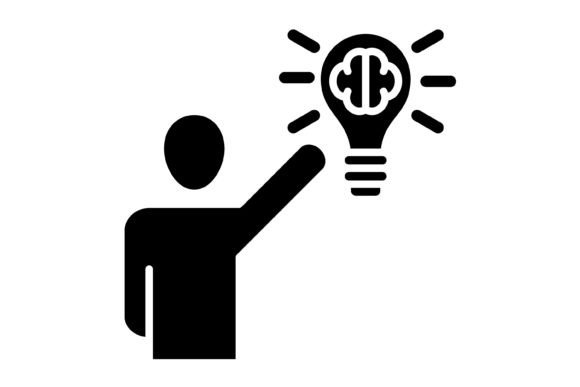
When you see the Thinking Glyph Icon, you aren't just looking at a random shape; you are looking at a universal shorthand for the human mind at work. In the world of design assets, specific icons carry heavy burdens. They have to communicate complex ideas—like cognition, problem-solving, or strategy—in a split second. This particular glyph usually features the classic "thought bubble" motif or a finger-to-chin gesture, but it’s the execution that matters here. As a premium font style asset, this icon bridges the gap between literal representation and abstract symbolism. It tells your user, "Wait a moment," "Processing," or "Great idea ahead." For anyone building a brand identity, this visual consistency is gold. It’s not just a picture; it’s a psychological trigger that prepares the viewer for content that requires intellect or reflection.
Visually, the style of this icon set leans heavily into modern typography trends. It avoids the dated, glossy 3D look of the early 2000s web and opts instead for flat design or subtle gradients that feel current and professional. The lines are clean, the curves are mathematically precise, and the silhouette is instantly recognizable even at small sizes. This is crucial for mobile apps where screen real estate is limited. You need an asset that doesn't turn into a muddy blob when scaled down to 16x16 pixels. The Thinking Glyph Icon solves this by relying on high-contrast geometry, ensuring that the "thought" is transmitted clearly whether it’s on a massive billboard or a tiny app button.
Practical Applications: From Digital Interfaces to Print Media
For web design and UI/UX professionals, the utility of a high-quality icon set cannot be overstated. The Thinking Glyph Icon is particularly useful in tutorial sections, FAQ pages, or customer support interfaces. Imagine a "Help" section where the user is stuck. A well-designed thinking icon acts as a visual empath, acknowledging the user's cognitive load. It works beautifully as a loading animation placeholder or a toggle for "tips and tricks" features. Because the package includes formats like SVG and Transparent Background PNG, you have total control over the color palette. You can easily match the icon to your specific hex codes without worrying about messy white boxes sitting on top of your background colors.
Beyond the screen, this asset proves its worth in editorial design and print. If you are a publisher or a blogger creating a physical workbook, journal, or magazine, this icon serves as a perfect section divider. It signals to the reader that they are entering a space for reflection or brainstorming. In packaging design, particularly for educational products, puzzle games, or strategy-based board games, the thinking glyph acts as a seal of intellectual engagement. It’s subtle, yet it elevates the perceived value of the product. It moves the design from "generic box" to "curated experience." The versatility of the included AI and EPS files means you can resize these vectors to fit a tiny corner of a business card or blow them up for trade show banners without losing a single pixel of sharpness.
Integration and File Flexibility
One of the biggest headaches in creative work is file compatibility. You find the perfect asset, but it’s locked in a format your software hates. The Thinking Glyph Icon package addresses this by including 5 different formats. This is a massive time-saver for content creators and marketers who might be working across different platforms on any given day.
- AI and EPS: These are your master files. If you are using Adobe Illustrator or similar vector software, these allow you to change stroke weights, alter colors, or deconstruct the icon to create something entirely new. This is where the "easy to edit" promise comes to life.
- SVG: The web standard. If you are building a site or an app, SVG (Scalable Vector Graphics) is non-negotiable. It keeps the file size small and the rendering crisp on Retina displays.
- JPG and PNG: For the entrepreneurs and hobbyists who aren't coders. If you are making a quick social media post in Canva or Photoshop, you just drag and drop the PNG. The transparent background means it layers instantly over your photos.
This flexibility ensures that the Thinking Glyph Icon is ready to use for all devices and platforms. Whether you are a developer needing code-friendly assets or a crafter making digital stickers, the barrier to entry is zero. You aren't buying a rigid object; you are buying a versatile component for your creative toolkit.
Visual Hierarchy and Brand Perception
Icons are the punctuation marks of visual language. Just as a period stops a sentence, a thinking icon pauses the visual flow to introduce a specific type of content. Using the Thinking Glyph Icon effectively can significantly improve your visual hierarchy. It draws the eye. If you have a dense block of text on a landing page, breaking it up with a relevant icon can increase engagement. It signals to the scanner that "this section is important" or "this section is different."
From a branding perspective, consistency builds trust. If your brand voice is intellectual, helpful, or solution-oriented, this icon reinforces that personality. It’s a small detail, but brand identity is built on the accumulation of small, consistent details. When a customer sees the same high-quality visual language across your social media graphics, your website, and your email newsletters, it creates a cohesive experience. It says, "We care about the details." It avoids the generic "clip art" look that can make a brand feel cheap or temporary.
Final Thoughts on Usability
Ultimately, the value of the Thinking Glyph Icon lies in its universality. It is a 100% vector solution that respects the intelligence of your audience. It doesn't scream for attention; it guides it. For designers looking for reliable design assets, or small business owners trying to professionalize their look, this icon set offers a blend of aesthetic appeal and functional robustness. It’s a smart addition to any digital library, ready to be deployed whenever you need to say, "Let’s think about this."